Understanding Raynaud’s:
Why Warmth Matters More Than You Think — and How Venustas Supports Everyday Comfort

For millions of people around the world, cold is not just uncomfortable — it can be physically painful and deeply disruptive to daily life. Raynaud’s phenomenon, a condition that affects an estimated 5–10% of the population, remains widely underrecognized despite its significant impact.
Through a collaboration with the Raynaud’s Association, Venustas aims to bring greater awareness to this condition and explore how warmth — when applied thoughtfully — can transform everyday experiences for those living with Raynaud’s.
A Condition Often Misunderstood
At its core, Raynaud’s is not an entirely abnormal response — it is an exaggerated version of a natural protective mechanism. When the body senses cold or stress, blood vessels in the extremities constrict to redirect blood toward vital organs, prioritizing survival over comfort.
As Lynn Wunderman, Chairman of the Raynaud’s Association, explains:
“The process of a Raynaud’s attack is a normal body reaction to cold or stress — it’s just that patients with Raynaud’s have a much lower threshold.”
For most people, this response might only occur in extreme conditions — such as severe cold or acute stress. For someone living with Raynaud’s, however, the threshold is dramatically different. Episodes can be triggered at temperatures as mild as 60–70°F, or even after a stressful moment in an otherwise comfortable environment.
This fundamental difference is what makes Raynaud’s so difficult to recognize. What feels like a normal day to most can become a source of numbness, pain, or loss of control for those affected — often without visible warning.
 The Invisible Impact on Daily Life

The impact of Raynaud’s extends far beyond occasional discomfort. It quietly reshapes how individuals interact with the world around them — often in ways that others may not fully understand.
Everyday actions that are typically taken for granted — holding a cold drink, reaching into a freezer, or walking through an air-conditioned store — can trigger painful episodes. Even more challenging is the unpredictability of modern environments. A person may move from a warm outdoor setting into an aggressively air-conditioned space, only to return again to heat — these rapid fluctuations alone can be enough to trigger an attack.
As Wunderman highlights, the condition is not limited to traditionally “cold” environments. Individuals living in warmer regions may still experience daily challenges due to indoor climate control or unstable temperature conditions. For those with frequent or prolonged exposure to cold environments — including outdoor workers, winter sports participants, or individuals in refrigerated workplaces — the impact can be even more significant.
Beyond the physical effects, Raynaud’s also carries a social and emotional dimension. Young individuals may struggle to “fit in,” unable to comfortably wear certain styles or participate in outdoor activities with peers. Adults, too, may find themselves navigating subtle social discomfort — wearing gloves or heavier layers in environments where others feel perfectly at ease.
In many cases, the condition can appear invisible to others. However, for many individuals, Raynaud’s presents visible signs, such as color changes in the fingers or toes — turning white as blood flow decreases, blue due to lack of oxygen, and red as circulation returns. While not everyone experiences these textbook changes, for those who do, it can be a noticeable and sometimes distressing aspect of the condition.
Why Warmth Is Not Just Comfort — But Strategy
One of the most important insights shared by the Raynaud’s Association is that managing Raynaud’s is not simply about reacting to cold — it is about anticipating and controlling it.
A common misconception is that keeping the hands or feet warm is enough. In reality, the body’s response begins at the core.
“That’s why it’s important not to just warm the extremities, but the full body, especially the core, to help deter the reaction,” Wunderman explains.
This understanding shifts the approach from short-term relief to long-term management.
Raynaud’s can also become a conditioned response. The more frequently attacks occur, the more easily they may be triggered over time — sometimes becoming more severe. Conversely, reducing exposure to triggers and preventing episodes can help decrease both frequency and intensity. This makes warmth not just a matter of comfort, but a proactive and strategic approach to living with the condition.
In this context, solutions such as layered clothing, environmental awareness, and reliable warming tools become essential — not as luxuries, but as part of a holistic approach to maintaining stability, comfort, and control in everyday life.

Despite affecting tens of millions of people, Raynaud’s remains underrecognized. One reason is the lack of a clear diagnostic test, as well as the variability of symptoms between individuals. Many people simply assume they “have poor circulation,” never realizing there is an underlying condition that can be better understood and managed.
For many individuals, living with Raynaud’s requires constant adaptation — learning triggers, adjusting routines, and building habits that prioritize warmth and protection. This is where practical solutions become essential. Layering, insulation, and reliable warming tools can help individuals regain a sense of control over their daily lives.
Heated apparel, in particular, offers a distinct advantage. Unlike traditional clothing, it delivers consistent, adjustable warmth that adapts to changing environments — whether indoors or outdoors, in moments of stillness or movement.
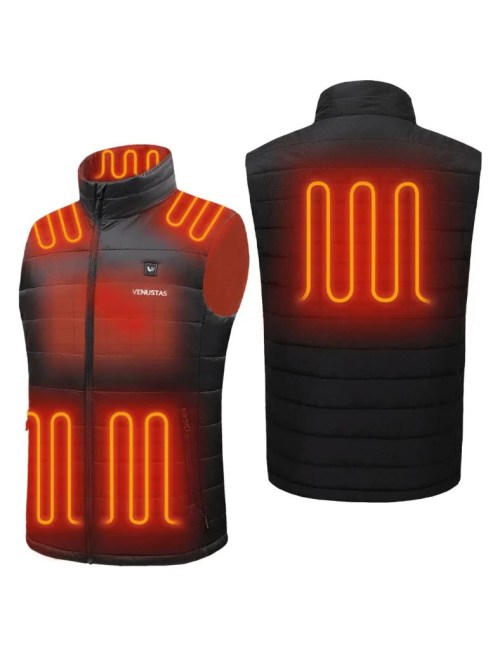
As a key player in the evolving heated apparel category, Venustas designs its products with these real-life challenges in mind. By integrating advanced heating technology into thoughtfully engineered garments, Venustas provides targeted warmth that supports the body’s natural balance — helping maintain core temperature, reduce sudden exposure to cold triggers, and sustain comfort during extended periods in low-temperature conditions.
At the heart of this approach is a commitment to listening. Venustas continuously learns from real user experiences and unmet needs across different environments and lifestyles. When first gaining a deeper understanding of Raynaud’s, the brand recognized not only the challenges faced by this community, but also the potential for heated apparel to offer meaningful support. This realization became a starting point — a desire to go beyond product innovation and work collaboratively to bring greater awareness to the condition, while introducing the potential health benefits of heated apparel to those who may need it most.
More importantly, these solutions are not about simply adding warmth, but about restoring possibility. Rather than limiting daily activities, they enable individuals to move with greater ease and confidence — continuing to work, commute, and participate in outdoor experiences without constant concern over the cold.
A Shared Commitment: Turning Warmth into Awareness
Since 2025, Venustas and the Raynaud’s Association have come together with a shared purpose: to move beyond awareness and bring tangible change to the lives of those living with Raynaud’s.
Through this collaboration, Venustas has worked to translate the science of warmth into real-world solutions — helping introduce heated apparel as a practical, everyday tool for managing symptoms. More importantly, it has created opportunities to educate and empower the Raynaud’s community, offering not just products, but a deeper understanding of how proactive warmth can reshape daily life.
For the Raynaud’s Association, introducing Venustas apparel to their community also represents a meaningful extension of their support — offering individuals practical tools to better manage symptoms, reduce discomfort, and regain a sense of control in their daily lives. By connecting education with real-life solutions, the organization is able to move one step closer to its mission of improving both awareness and quality of life for those affected.
At the same time, this partnership has extended far beyond the patient community. By working closely with the Raynaud’s Association, Venustas is working to bring greater visibility to a condition that often goes unnoticed — amplifying stories, sharing knowledge, and encouraging broader public understanding of what it truly means to live with Raynaud’s.
Together, this co-promotion is not simply about products or campaigns. It is about shifting perception — helping more people recognize that “feeling cold” can, for some, mean pain, limitation, and daily challenges that are rarely seen. And through that recognition, fostering greater empathy, inclusion, and support for those affected.
Because in the end, warmth is not only physical — it is also awareness, understanding, and the willingness to care.
 Bridging Awareness and Real-Life Solutions

Despite affecting tens of millions of people, Raynaud’s remains underrecognized. One reason is the lack of a clear diagnostic test, as well as the variability of symptoms between individuals. Many people simply assume they “have poor circulation,” never realizing there is an underlying condition that can be better understood and managed.
This is why collaboration between patient organizations and brands is so important. While organizations like the Raynaud’s Association provide education, advocacy, and community support, brands can help translate those insights into practical, everyday solutions. Together, they create a more complete ecosystem — one that not only raises awareness but also improves quality of life.
As awareness grows, so does the opportunity to better support those living with Raynaud’s. Education, early recognition, and access to effective solutions can all play a role in reducing the burden of the condition. For individuals, understanding triggers and adopting proactive strategies can make a meaningful difference. For the broader public, simply recognizing that “cold sensitivity” may be more than discomfort is an important step forward.
For Venustas, this collaboration is not just about providing warmth, but about redefining what warmth can mean. By combining advanced heating technology with a deeper understanding of real-life challenges, Venustas seeks to support individuals in staying active, confident, and in control of their daily lives — even in environments that once felt limiting.
Because for those living with Raynaud’s, warmth is not simply comfort. It is independence, possibility, and the freedom to engage fully with the world around them.
This article was originally published on Venustas’ blog and is reprinted here with permission: https://venustas.com/blogs/news/understanding-raynaud-s-empowering-everyday-warmth-venustas-partners-with-raynaud-s-association.